Central group · The Azores
Graciosa
Slow days, quiet wonders.
Volcanic caves, thermal waters and peaceful landscapes shaped by the Atlantic.
The white island
Small island. Remarkable discoveries.
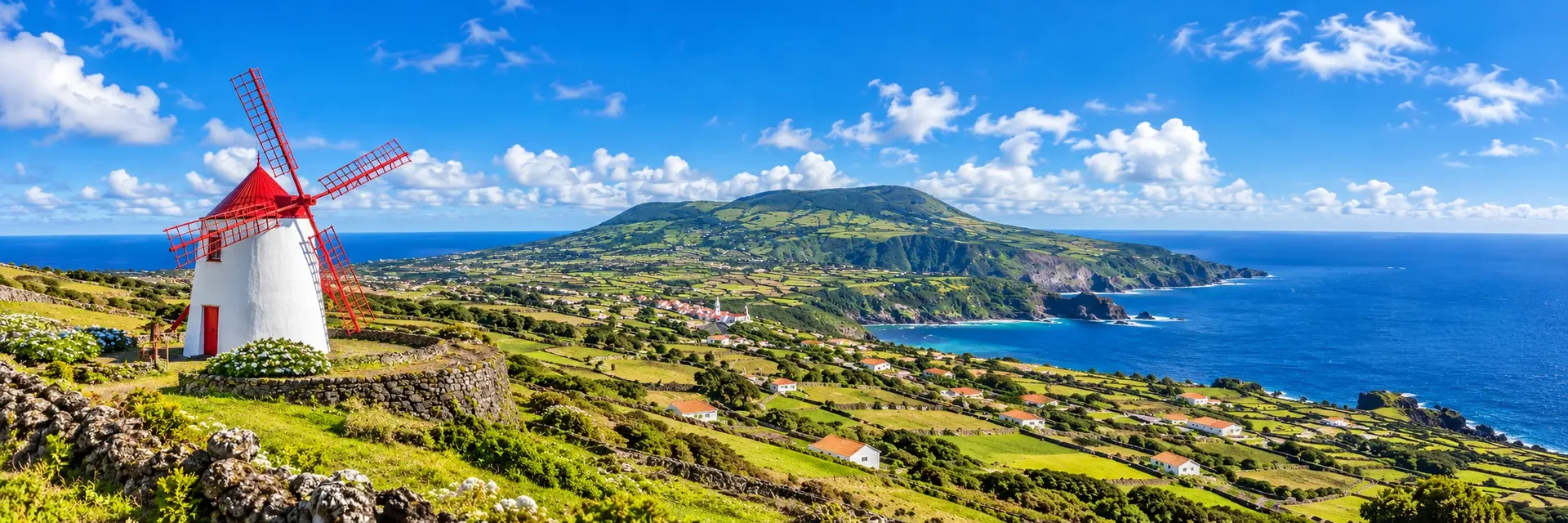
Graciosa is one of the most peaceful islands in the Azores: a landscape of gentle volcanic hills, whitewashed villages, vineyards and a coastline carved by the Atlantic. Descend into the extraordinary Furna do Enxofre, explore the Caldeira, relax beside the sea at Carapacho and follow quiet roads between traditional windmills and timeless villages.
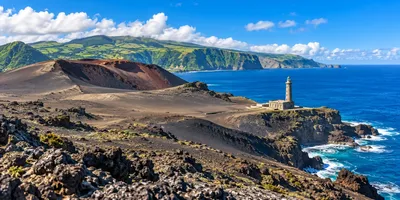
Santa Cruz da Graciosa is the main town, with traditional streets, windmills and a calm northern coastline, and the island's airport (GRW) is close by. In the centre, a walk around the Caldeira leads to Furna do Enxofre, a volcanic cavern hidden deep inside the crater. In the south, Carapacho has thermal waters beside the sea and rugged volcanic shores, while the west coast leads to the lighthouse at Ponta da Barca and its views of Ilhéu da Baleia.
Highlights
Places you'll remember
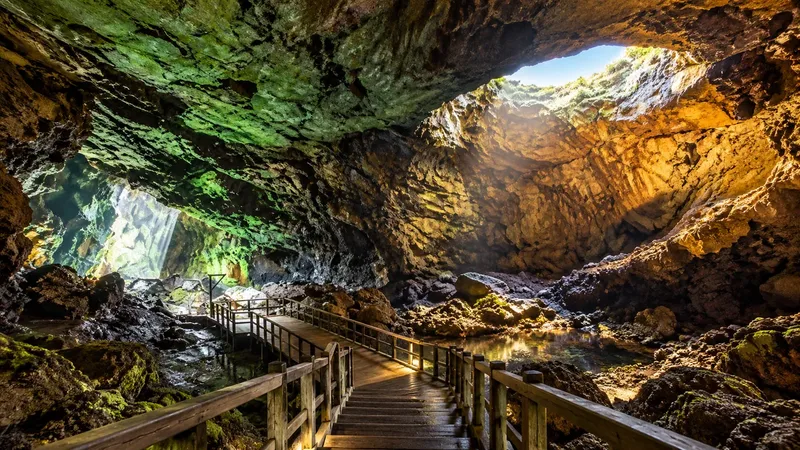
Furna do EnxofreDescend into the heart of a volcano. 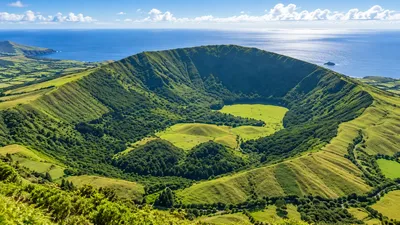
Caldeira da GraciosaA vast green crater hiding a volcanic world below. 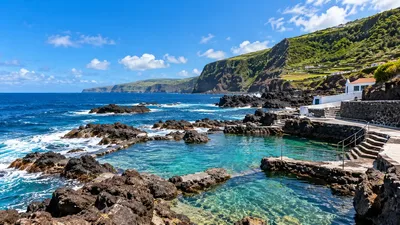
Termas do CarapachoThermal waters beside the Atlantic. 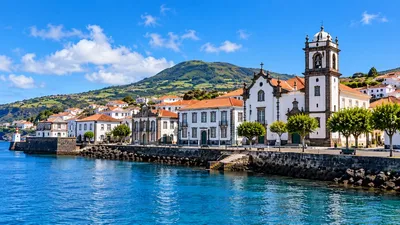
Santa Cruz da GraciosaWhitewashed streets and island traditions. 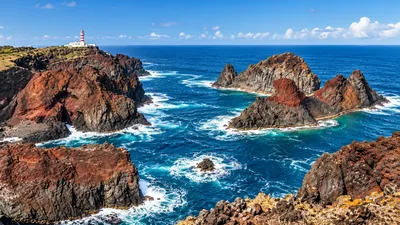
Ponta da Barca and Ilhéu da BaleiaLighthouse views over a dramatic volcanic coast.
Suggested itinerary
Your first four days on Graciosa
- Day 1
Santa Cruz & the north
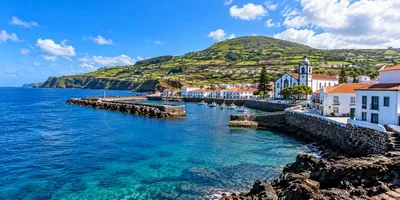
Explore the island's main town, traditional streets, windmills and peaceful northern coastline.
- Day 2
Caldeira & Furna do Enxofre
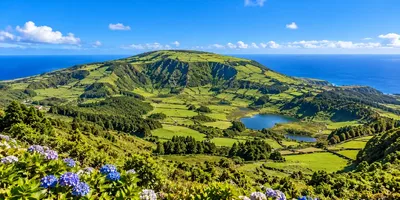
Walk around the Caldeira and descend into Graciosa's extraordinary volcanic cavern.
- Day 3
Carapacho & the south coast
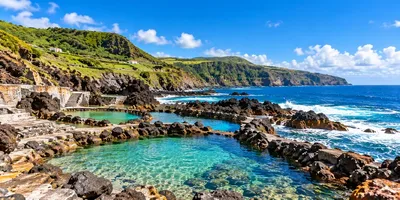
Relax by the thermal waters and explore the rugged volcanic landscapes of the south.
- Day 4
Ponta da Barca & the west
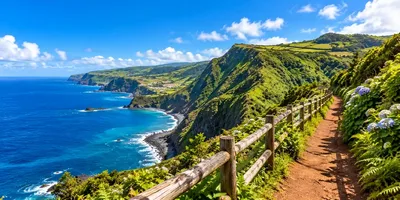
Follow the western coast to its lighthouse, viewpoints and the unmistakable Ilhéu da Baleia.
Make it your own — Graciosa is best explored slowly, with time for unexpected stops.
On the map
Places to explore on Graciosa
Before you go
Plan your visit
Good to know
Good to know before you go
Keep exploring
Discover another island
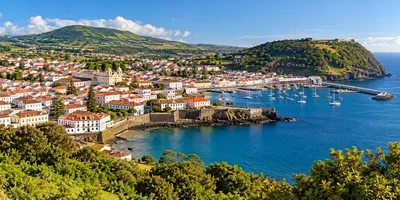
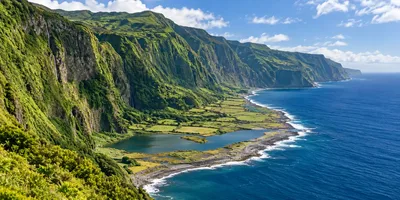
Central group
São Jorge
Fajãs, cliff trails, cheese, and one of the wildest coastlines in Portugal.
Explore island guide