Guides · Nature
Graciosa island guide: the Caldeira, Furna do Enxofre and windmills
A gentle, low-lying island with a crater you can walk into and a cave beneath it: what to see on Graciosa, a UNESCO Biosphere Reserve.
3 min read
Updated 18 October 2026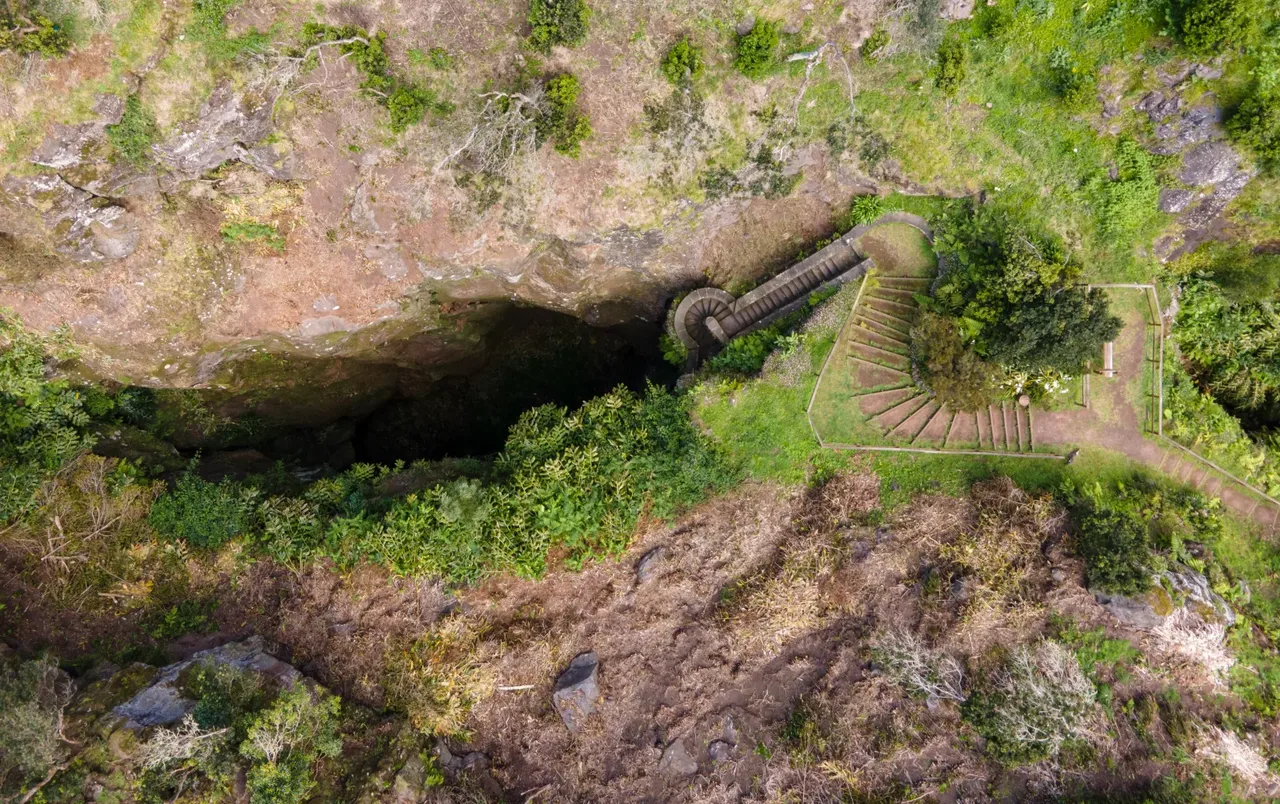
Graciosa is the northernmost island of the Central Group and the second smallest in the archipelago. Its landscape is softer than its neighbours': rolling fields, low hills, windmills and whitewashed villages. Light-coloured volcanic rock gave it the nickname of the white island, and places such as Pedras Brancas and Serra Branca carry the same idea in their names. Since September 2007 the whole island has been a UNESCO Biosphere Reserve.
Getting there
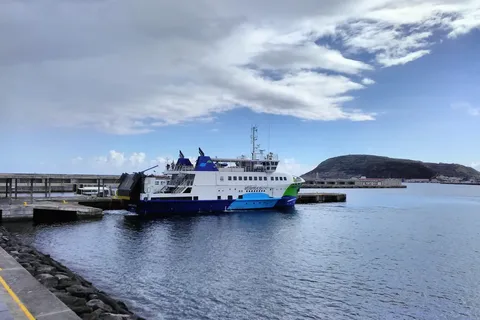
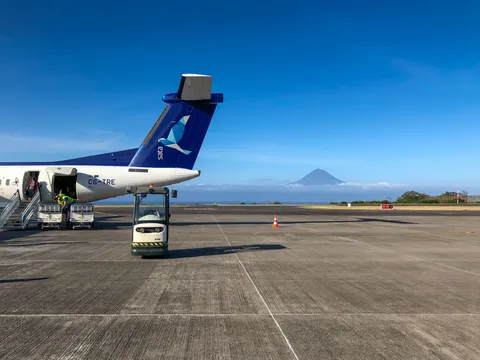
Graciosa has its own airport, which opened together with the port of Praia in the 1980s. It is also on the Atlânticoline network, with the harbour at Vila da Praia. Check current sailings and flights before you build an itinerary around them, since both depend on season and weather.
The Caldeira and the Furna do Enxofre
The island's signature sight is the Caldeira, an oval crater up to 1.6 km across and about 270 m deep at the top of the island's small central volcano. You can drive in through a road tunnel or climb to the Furna da Maria Encantada, a small cave on the rim, for a view over the whole bowl.
Inside the crater is the Furna do Enxofre, a huge volcanic cave whose dome is described by the Natural Parks as the largest in Europe. Entry is through the Furna do Enxofre Visitors Centre, from where a tower staircase of 183 steps leads down to a cold lake and a bubbling mud fumarole. The centre's screens show live gas readings from inside the cave, a reminder that this is still active volcanic ground, so always follow staff instructions. Check the Natural Parks page for current opening times.
Going down is easy, but the climb back up the 183 steps is a workout. Wear shoes with good grip and take your time.
Coast, islets and lighthouses
Graciosa's coast alternates between tall cliffs at Serra Branca and Ponta da Restinga and low bays such as Folga and Barra. Off Praia, the green Ilhéu da Praia is a protected nesting site for Monteiro's storm petrel, a seabird found only in the Azores. In the north-west, the Ponta da Barca lighthouse looks out over the Ilhéu da Baleia, a rock shaped like a whale that is at its best at sunset.
Santa Cruz, wine and the thermal spa
Santa Cruz da Graciosa, the main town, has cobbled streets, water tanks and a broad square. Above it, the Monte de Nossa Senhora da Ajuda has a chapel, a viewpoint and a bullring built inside a small crater. Restored windmills dot the island; some now offer accommodation. Graciosa has its own demarcated wine region, so ask for a local wine with dinner.
In the south-east, the Termas do Carapacho in the parish of Luz use mineral water at 35 to 40 °C for baths and treatments. It makes a calm end to a day of walking around the Caldeira.
- Topic
- Nature
- Islands
- Graciosa
- Reading time
- 3 min