Guides · Practical
Your first trip to the Azores: the practical guide
Nine islands, three groups, one time zone behind Lisbon. How to get there, how many islands to see, how to hop between them, and the paperwork to check.
3 min read
Updated 18 October 2026
The Azores are easy to reach and easy to love, but they are bigger and more spread out than most first-time visitors expect. A little planning around flights, island choice and the weather goes a long way. This guide covers the essentials, with links to the official sources so you can check the details that change.
Nine islands, three groups
The archipelago is nine volcanic islands scattered across about 600 km of the North Atlantic, roughly 1,600 km from mainland Portugal. They fall into three groups:
- Eastern Group: São Miguel and Santa Maria.
- Central Group: Terceira, Graciosa, São Jorge, Pico and Faial.
- Western Group: Flores and Corvo.
Each island has its own character: the crater lakes of São Miguel, the fajãs of São Jorge, Pico's mountain, the Capelinhos volcano on Faial, the waterfalls of Flores and Corvo's Caldeirão, to name a few.
Getting there
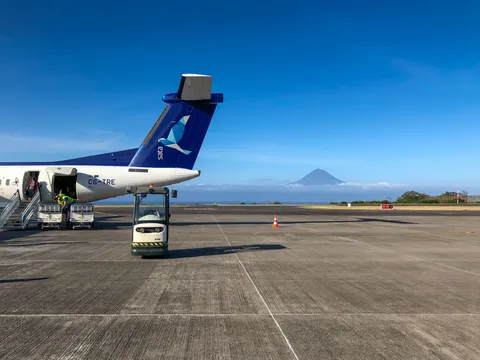
Azores Airlines names two entry points to the archipelago: Ponta Delgada's João Paulo II Airport on São Miguel and Lajes Airport on Terceira. Faial also has an airport at Horta. Routes and seasonal flights change every year, so check the airport's website and the airlines for what is flying when you travel.
How many days, and how many islands?
Distances between the groups are large, and Atlantic weather can delay a flight or a ferry. As a rule of thumb, give each island at least three or four full days, and treat a single group as a comfortable one-week trip. For a first visit, São Miguel alone easily fills a week. Faial, Pico and São Jorge, known together as the "triangle" islands of the Central Group, pair naturally. Keep a spare day before your flight home in case the weather changes your plans.
Getting between islands
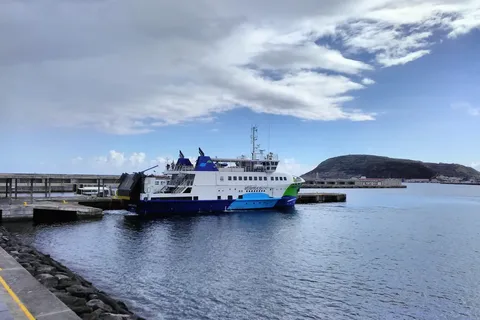
SATA Air Açores flies between all nine islands, and Atlânticoline runs the regional passenger ferries. Timetables change by season, so check both operators' sites for current routes. Our separate guides to inter-island flights and ferries cover the details.
Money, language, time and documents
- Currency: Portugal uses the euro.
- Language: Portuguese is the official language. A few words of greeting go a long way.
- Time: the Azores are one hour behind mainland Portugal all year. Clocks show UTC−1 in winter and UTC+0 in summer, changing at the same moment as the mainland in March and October, as set out by IPMA.
- Entry: Portugal is in the EU and has been in the Schengen area since 1995. If you are not an EU, Icelandic, Liechtenstein, Norwegian or Swiss citizen, the Entry/Exit System (EES) will register you when you cross the Schengen external border for a short stay (up to 90 days in any 180-day period).
- ETIAS: the EU's travel authorisation for visa-exempt visitors is not yet in operation, and no applications are being collected. The EU will announce the start date several months in advance. Check visa rules for your nationality on official sources before you book.
Travel lightly
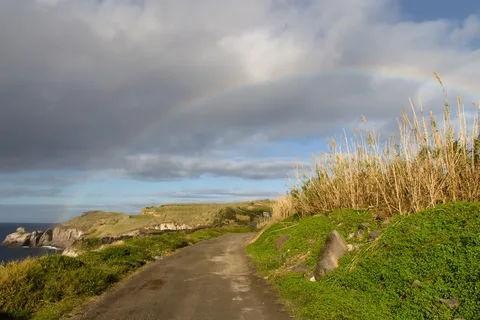
Much of the islands' most beautiful landscape is protected. Every island has its own Nature Park, with interpretation centres, marked trails and field guides that are worth a look before you set out. Stay on the marked paths, take your rubbish home and leave plants where they grow. At sea, whales and dolphins are protected species, and a code of conduct sets out how to watch them without disturbing them. Follow the guidelines and safety rules the crew gives you on board.
Pick your first island, then build outward. You will see more by going slowly on two islands than by rushing through five.
- Topic
- Practical
- Islands
- All nine islands
- Reading time
- 3 min