Weather
Four seasons in a day: understanding Azores weather
Mild all year, humid and quick to change. What the official climate numbers say, why altitude matters, what to pack and how to read IPMA forecasts and warnings.
4 min read
Updated 18 October 2026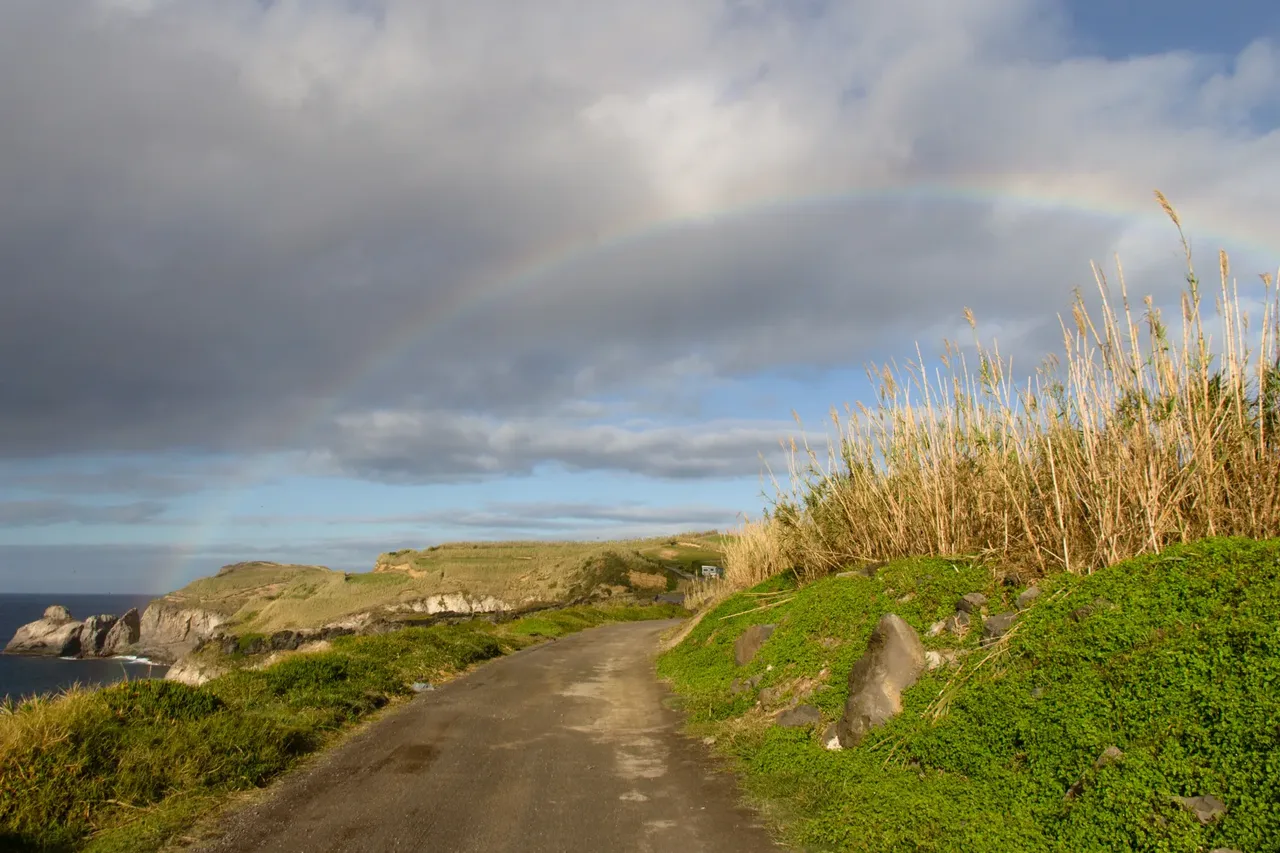
Locals like to say you can get all four seasons in a single Azores day, and it is barely an exaggeration. A sunny harbour at breakfast, a drizzly crater rim at lunch and a rainbow over the sea by mid-afternoon is a perfectly ordinary day. The good news is that the swings happen inside a narrow, gentle temperature band. You rarely need to cancel plans; you just need to be ready for them to change.
A mild ocean climate, steered by the Azores High
The islands sit far out in the North Atlantic, and the ocean keeps things soft. According to the Azores Geopark, the weather depends largely on the position and strength of the Azores anticyclone, the high-pressure system named after the archipelago. The air is humid, rain is regular and plentiful, winters are the wettest time, summers are the sunniest, and wind is a frequent companion.
IPMA, Portugal's national weather service, publishes official climate normals for 1991–2020. At the Ponta Delgada observatory, close to sea level on São Miguel, the monthly average runs from about 15 °C in January and February to 23 °C in August. Average afternoon highs are around 17–18 °C in winter and 26 °C in August, and summer nights stay close to 19–20 °C. The hottest reading of those 30 years was 30.1 °C, and the station's coldest night was 5.0 °C. In other words: no heatwaves, no frost at the coast.
Rain: how much, when and where
Ponta Delgada averages just under 1,000 mm of rain a year, spread over roughly 122 days with at least 1 mm. July is the driest month, with about five rainy days, and December the wettest, with about fifteen. Out in the Western Group it is wetter still: the Flores airport station records around 1,640 mm a year, while Angra do Heroísmo on Terceira and Horta on Faial sit at about 1,030 and 1,090 mm. That rain is what keeps the islands so green.
Microclimates: altitude and the side of the island
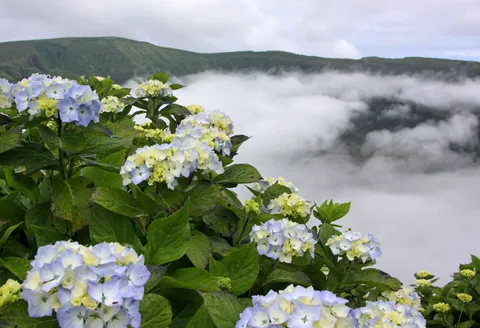
Every number above comes from a station near the shore. Inland and uphill, conditions can be quite different. The Geopark notes that snow falls only on high ground, most often on Pico Mountain, and that some places have their own microclimates. In practice, a crater lake viewpoint can sit inside a cloud while the coast below is in sunshine, and the windward and sheltered sides of an island can feel like two different days. If one view is clouded in, try another spot or come back in an hour.
What to pack
- Layers you can add and remove: a T-shirt, a warm mid-layer and a light fleece cover most days of the year.
- A proper waterproof jacket, even in summer. An umbrella is little use in the wind.
- Walking shoes with good grip. Trails, cobbles and basalt get slippery when wet.
- Sun protection. A cloudy morning is no guarantee of a cloudy afternoon.
- Swimwear for the sea, natural pools and hot springs, whatever the season.
How to read the forecast
Use IPMA's local forecasts, which give hour-by-hour conditions for towns on every island. For anything at sea or on high ground, also check the IPMA warnings page. The Azores are split into three warning zones: the Western, Central and Eastern Groups. Warnings cover wind, heavy rain, thunderstorms, fog and rough seas, among other things.
The colours are simple. Green means no risk is expected. Yellow means the weather could affect some activities, so keep an eye on it. Orange means moderate to high risk, and red means extreme risk. On orange or red days, follow the advice of the civil protection authorities.
Booked a boat trip, ferry or whale watching tour? Check the sea state warning for your island group the evening before. Operators may postpone or cancel trips when the sea is rough, so leave a spare day in your plans.