Western group · The Azores
Flores
Nature, untamed.
Wild cliffs, crater lakes and waterfalls at the edge of Europe.
The waterfall island
Where the Azores turn wild.
Flores feels like nature turned all the way up: sheer green cliffs, crater lakes, hidden valleys and waterfalls spilling towards the Atlantic. From the cascades of Poço da Ribeira do Ferreiro to the remote villages of the west coast, Flores rewards slow travel.
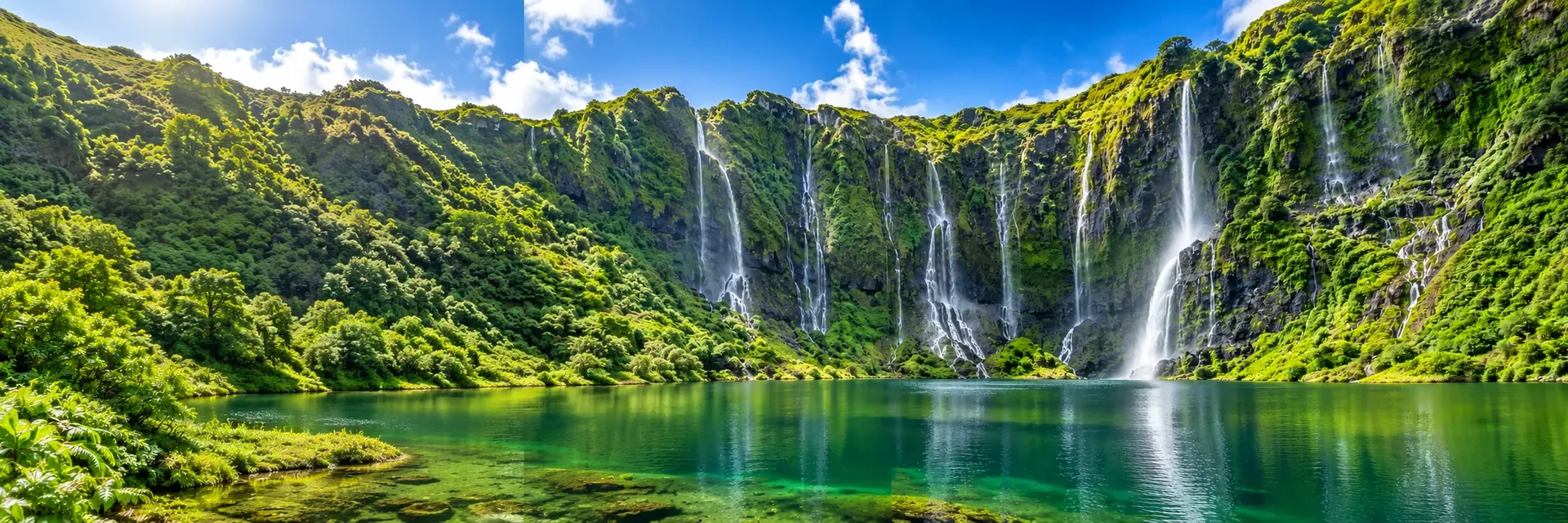
Follow winding roads through hydrangea-lined landscapes, walk beside volcanic lakes and discover an island where the weather, ocean and mountains shape every day. Santa Cruz das Flores is the main town and home to the island's airport (FLW); explore its volcanic coastline and natural swimming pools before following the coast south. On the west coast, a walk leads to the wall of waterfalls at Poço da Ribeira do Ferreiro, and Poço do Bacalhau tumbles down beside the village of Fajã Grande.
Highlights
Places you'll remember
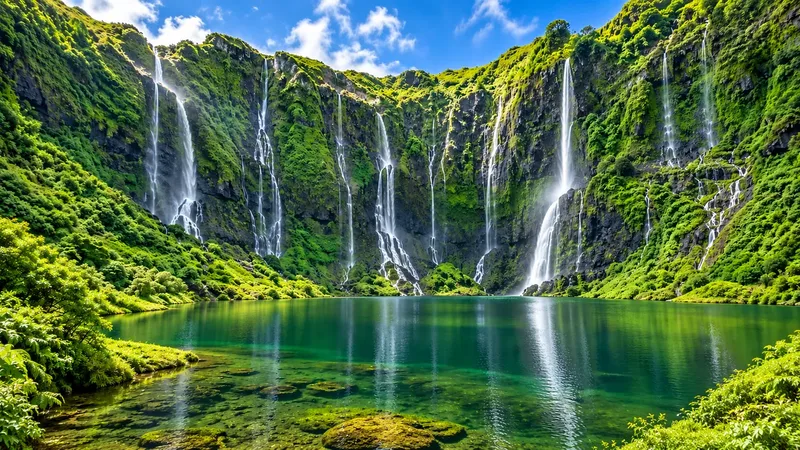
Poço da Ribeira do FerreiroA wall of waterfalls in the heart of Flores. 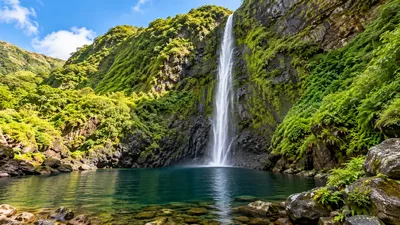
Poço do BacalhauA towering waterfall beside Fajã Grande. 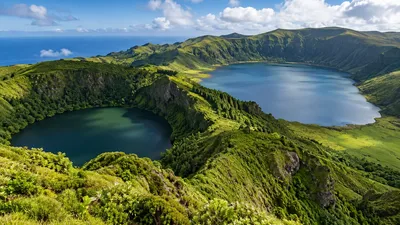
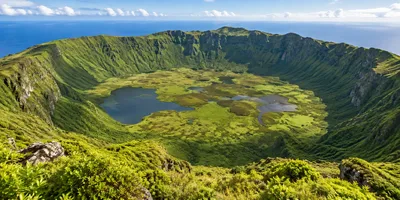
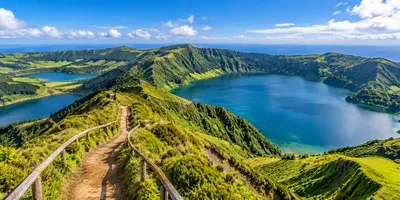
Lagoa Negra and Lagoa CompridaVolcanic lakes surrounded by wild green highlands. 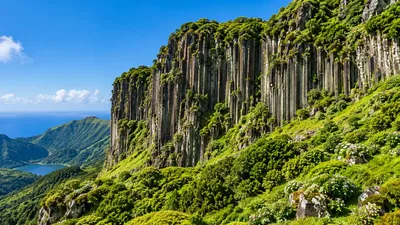
Rocha dos BordõesFlores' extraordinary wall of basalt columns. 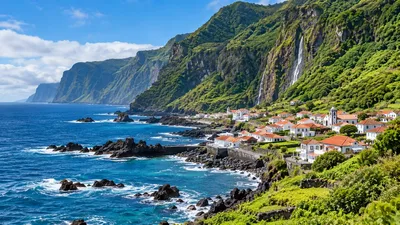
Fajã GrandeWaterfalls, ocean views and life on the wild west coast.
Handpicked for you
Experience Flores
Flores is the Azores at its most elemental — an island where the landscape does the work and every tour feels like a journey into remote terrain. Full-day island tours are a popular choice: guides drive through a sequence of viewpoints that would be difficult to identify alone, stopping at the Lagoa Funda and Lagoa Comprida crater lakes on the ridge, the Poço do Bacalhau waterfall near Fajã Grande, and the small waterfalls that cascade directly into the sea along the southern coast.
Suggested itinerary
Your first four days on Flores
- Day 1
Santa Cruz & the east coast
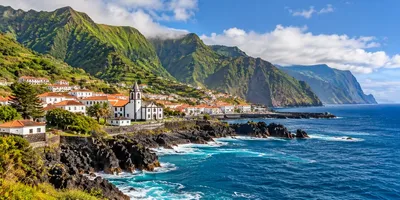
Explore the island's main town, volcanic coastline and natural swimming pools before following the coast south.
- Day 2
Fajã Grande & the waterfalls
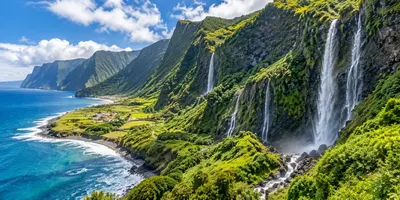
Walk to Poço da Ribeira do Ferreiro, visit Poço do Bacalhau and spend the afternoon on Flores' dramatic west coast.
- Day 3
Crater lakes & the highlands
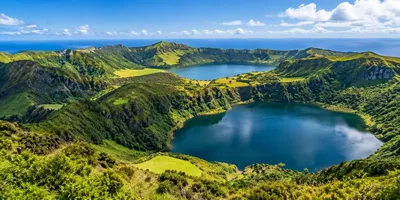
Cross the central plateau, discover Flores' volcanic lakes and take in sweeping views across the island.
- Day 4
Rocha dos Bordões & the south
See the island's iconic basalt columns, explore the southern landscapes and slow down in peaceful coastal villages.
Make it your own — leave room for the weather and a little spontaneity.
On the map
Places to explore on Flores
Before you go
Plan your visit
Good to know
Good to know before you go
Keep exploring