Guides · Nature
Whale and dolphin watching in the Azores: seasons, rules and tips
Which whales and dolphins you can see in the Azores and when, how the old vigia lookouts still guide the boats, and how to pick a licensed operator.
3 min read
Updated 18 October 2026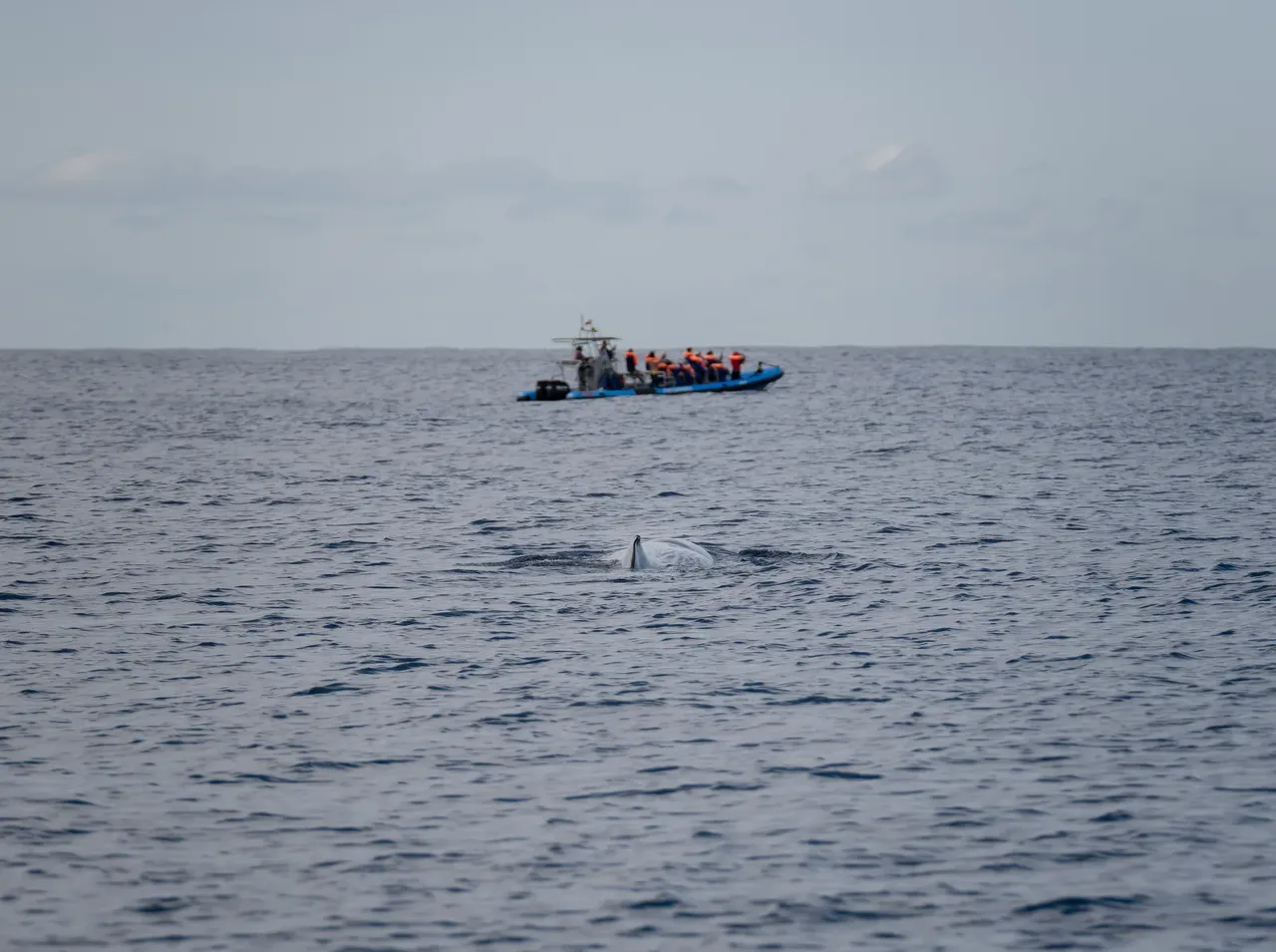
The Azores rank among the best places in the world to see whales and dolphins. Deep water comes right up to the islands, and the regional tourism board counts more than 20 species of cetaceans in these seas, some living here all year and others passing through on migration. Boats leave from several islands, with São Miguel, Pico, Faial and Terceira having the most operators.
What you might see, and when
There is something to see in every month, but the cast changes with the seasons:
- All year: common dolphins and bottlenose dolphins are resident.
- End of winter: the best chance of blue whales, as migrating whales pass through.
- Summer: sperm whales and sei whales are frequent, and Atlantic spotted dolphins become more common.
Sightings are never guaranteed, but they are the rule rather than the exception. Some operators refund your ticket when nothing is seen, so ask about their policy when you book.
The vigias: lookouts from the whaling days
Whaling shaped island life for centuries. Lookouts called vigias, small houses on coastal headlands, scanned the sea and passed word to the whaling crews when animals were sighted. Several have been restored, and today trained spotters in them once again search the horizon for whales, now to guide the watching boats. The vigias are also worth visiting in their own right for the coastal views, and the whaling museums on Pico and Faial tell the story of that era.
The rules that protect the whales
Whale watching has been regulated by regional law since 1999. Commercial trips need a licence from the Regional Directorate for Tourism, and each licensed company must have a specialist in marine biology or animal behaviour, a trained crew, an onboard guide and a lookout. The code of conduct forbids chasing, disturbing or feeding the animals, making noise or polluting. Boats must move alongside at a steady speed and keep at least 50 m away, or 100 m when calves are present, and no more than three boats may stay with the same group at once. Swimming with whales is not allowed.
Choosing an operator
The regional tourism portal publishes a list of licensed companies for each island, and booking with one of them means the crew follows these rules. Check how long the trip lasts, whether the boat is a rigid inflatable or a larger vessel with cover, and what happens if the sea is too rough to go out.
Comfort and safety on board
A typical trip lasts about three hours. The tourism board recommends a minimum age of around five, because even a calm sea can feel rough for small children. If you are prone to seasickness, take medication beforehand, and bring water, a light snack, sun protection and a windproof layer. Trips are postponed when sea conditions are poor, so avoid booking on your last day.
Rigid inflatables are fast and get you low to the water, but they are bumpy. If you have back problems, are pregnant or travel with young children, ask for a larger, more stable boat.
- Topic
- Nature
- Islands
- All nine islands
- Reading time
- 3 min